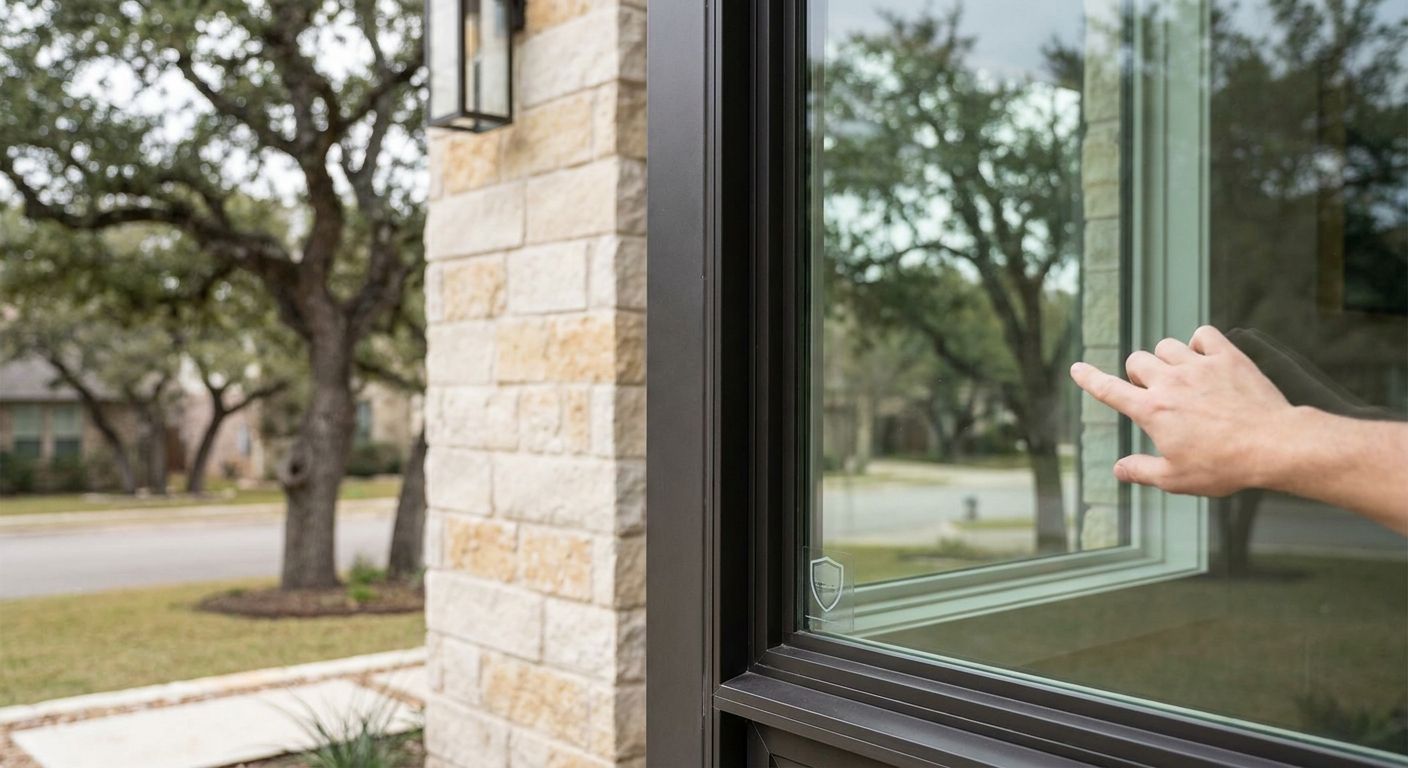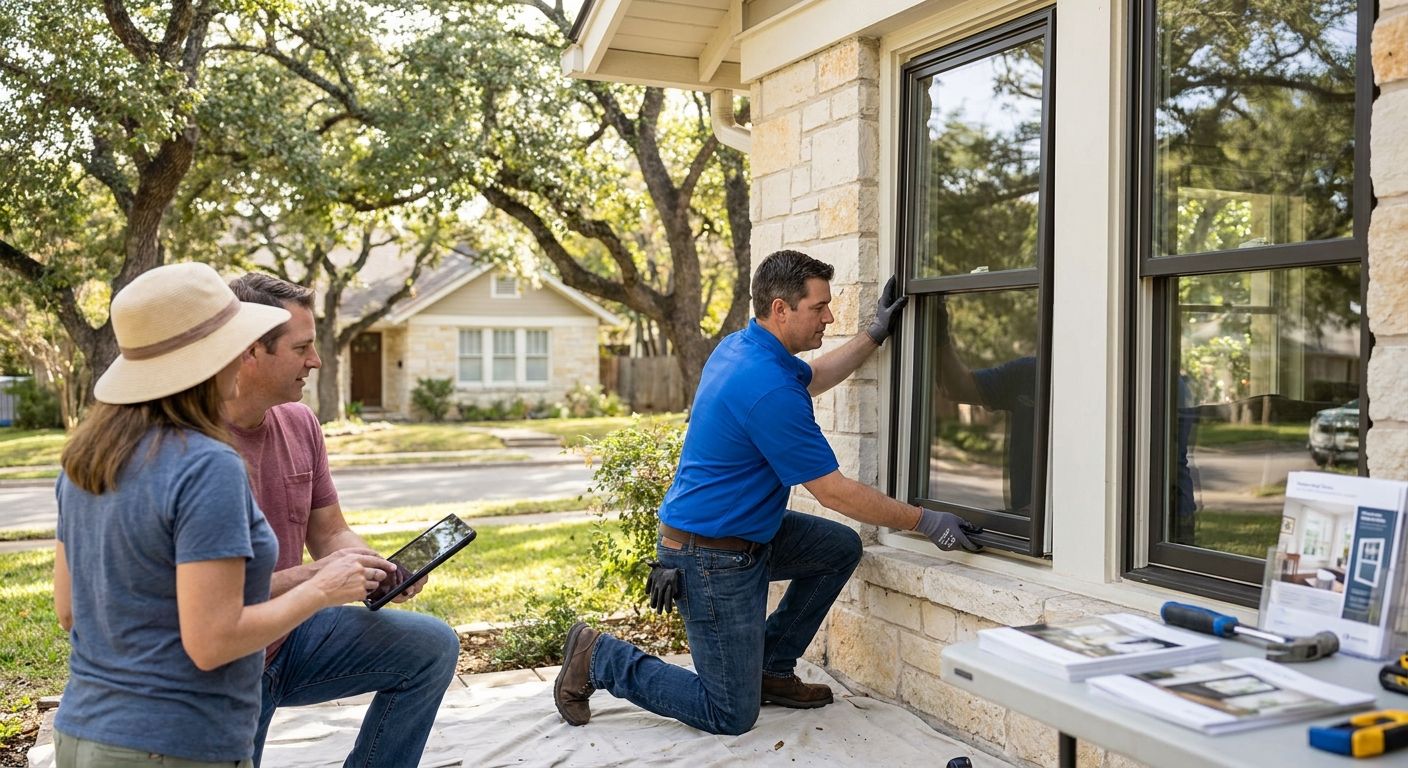
Replacing windows in an Austin home means solving for triple-digit summer heat, freak February freezes, and a building code that does not forgive cheap glass — get the sequence right and the job pays for itself in comfort by the first August.
- AWE Build specs double-pane low-E glass at a U-factor of 0.30 or lower for window replacement Austin homes need in 2026.
- Vinyl frames outperform aluminum here because they don't conduct Central Texas heat into the house.
- A standard single-story replacement runs 7-10 business days from final measurement to install.
- Skip clear glass and single-pane units entirely — they fail current energy code and spike cooling bills.
Why this matters
Windows are the weakest thermal point in most Austin houses built before 2005. Up to a quarter of a home's summer heat gain moves through under-performing glass, which is exactly why the region's energy code caps U-factor and solar heat gain coefficient (SHGC) for new installs. Get the specs wrong and you're paying for a mistake every June through September for the next 15-20 years. Get them right once and the house runs quieter and cooler without the AC working overtime.
This guide covers the decision points in order: what to gather before you call anyone, the steps to spec and schedule the job, what goes wrong mid-project, and where to go for the parts that matter most. Every step assumes an existing single-story or two-story Austin home, not new construction.
What you'll need
- Current window count and rough openings — measure width and height at three points per window (top, middle, bottom); older Austin homes are rarely square
- A copy of your home's original window specs if available — helps flag whether you're dealing with wood, aluminum, or vinyl frames underneath
- Photos of trim and exterior cladding at each window — siding type changes install method
- A target U-factor and SHGC — 0.30 and 0.25 respectively for Austin's climate zone is the baseline to quote against
- 1-2 free weekends or a flexible work-from-home stretch — install crews need interior access room by room
- A quote from an insured contractor; AWE Build handles window replacement, siding, and door work across the Austin metro and can walk the spec conversation with you before you commit to a bid
The steps
1. Audit every window before you call for quotes
Walk the exterior and interior of the house and log condensation between panes, visible frame rot, and any window that won't latch. Fogging between the panes means the seal has failed and the gas fill is gone — that's a hard replace, not a repair. This step alone determines whether you're looking at 4 windows or 20, which changes both your budget conversation and your install timeline.
Common mistake: homeowners quote only the windows that look bad and skip the ones that still work fine. A window with an intact seal but a single-pane clear glass unit is still leaking heat every day in 2026 — it just isn't obvious from across the room.
2. Set your U-factor and SHGC targets before you talk frame material
Austin sits in Climate Zone 2, which calls for a U-factor at or below 0.30 and an SHGC at or below 0.25 on new window installs. Lock these numbers in first — they're non-negotiable for code compliance and they're the actual driver of your energy bill, not the frame color or the brand name on the sticker.
Anything above 0.35 U-factor is functionally a downgrade dressed up as new construction. Write the two numbers on your quote request and make every contractor price against them.
3. Pick frame material for Central Texas heat cycling, not for looks
Vinyl frames handle the expansion and contraction of 100°F summer days followed by sub-freezing snaps (Austin saw single-digit lows in February 2021 and again in early 2025) better than aluminum, which conducts heat straight into the house and can warp over repeated cycles. Wood-clad options exist for historic districts with strict exterior requirements, but they need more maintenance in this climate than vinyl.
Buy vinyl for most Austin homes. Consider wood-clad only if a historic overlay district requires it. Skip aluminum unless you're matching a mid-century modern facade and you've budgeted for the added conductivity.
4. Get three quotes and compare specs line by line, not totals
A lower total often hides a lower-grade glass package or a smaller labor scope (trim work excluded, disposal excluded). Put U-factor, SHGC, frame material, glass thickness, and warranty terms side by side across all three bids before you look at price at all.
Ask directly whether the quote includes full-frame replacement or pocket/insert replacement — insert replacement is faster and cheaper but keeps your old, often rotted, exterior frame in place. Full-frame costs more labor but is the right call on any window showing frame damage from step 1.
5. Confirm permit and inspection requirements before demo day
Window replacement in the City of Austin and most surrounding municipalities requires a permit when you're changing rough opening size or altering structural framing — straight swaps in the same opening often don't. An insured contractor pulls this permit as part of the job; a crew working without one is a red flag regardless of price.
Confirm this in writing before signing. Skipping a required permit can create problems later at resale when the buyer's inspector flags unpermitted work.
6. Schedule around Austin's install season, not just your calendar
Spring (March-May) and fall (September-November) are the busiest booking windows for Austin contractors because homeowners want new windows in before or after peak summer heat. Booking in January or June often gets you a faster start date and sometimes better crew availability. A standard single-story home with 10-15 windows runs 7-10 business days from final measurement to install day; full-frame jobs and two-story homes with scaffolding add time.
Expected outcome: by the end of install week you should have caulked, trimmed-out windows with no visible gaps, and the crew should walk you through operating each new unit before they leave.
7. Do a final walkthrough with a flashlight, not just daylight
Daylight hides gaps that a flashlight held at an angle against the frame will show instantly. Check every corner for caulk consistency, confirm each window opens and locks smoothly, and run a hand along the interior sill for drafts on a windy day.
Common mistake: signing off on the job before the caulk has fully cured, which can mask a gap that opens back up within a few weeks.
Get an Austin window quote
AWE Build specs U-factor and SHGC to Austin's climate zone before pricing your job.
Troubleshooting
Problem: new windows still feel drafty after install. Check the exterior caulk line first — a missed or thin bead is the most common cause. If caulk looks intact, the issue is likely a foam insulation gap inside the frame that wasn't fully filled during install.
Problem: condensation forms on the inside of new double-pane glass. This is usually a humidity issue inside the house, not a seal failure — common in newly renovated Austin homes with tighter envelopes and less natural air exchange. Run the bathroom fan longer after showers and check that the HVAC isn't oversized for the space.
Problem: one or two windows don't match the others in color or trim. Happens when windows are ordered in separate batches from different manufacturer runs. Confirm all units ship from the same production batch before install day, not just the same model number.
Problem: the quote changed after measurement. Rough opening measurements sometimes reveal out-of-square framing that needs correction before the new window fits — this is a legitimate add, but ask for photos and a written explanation before approving extra cost.
Problem: permit inspection flags the install. Most flags are minor — missing flashing tape or insufficient fastener spacing. An insured contractor fixes this at no extra charge as part of the original scope; get that in writing before the job starts.
Tools and resources
- Tape measure and notepad for the pre-quote audit in step 1
- A copy of Austin's current energy code climate zone requirements (Zone 2: U-factor at or below 0.30, SHGC at or below 0.25)
- Three written, side-by-side quotes before you sign anything
- AWE Build for window replacement, siding, and door work if you want one insured contractor handling multiple exterior projects instead of three separate crews
What to do next
If your windows pass the audit in step 1 but your siding or exterior trim is failing around them, get that assessed in the same visit — a window replacement crew working around rotted siding will cost you a second mobilization later. Talk to a contractor who scopes both at once before you commit to a single-trade quote.
FAQ
What's the best window replacement option for an Austin home in 2026?
Double-pane low-E vinyl windows with a U-factor at or below 0.30 and SHGC at or below 0.25 are the standard for Austin's Climate Zone 2 in 2026. Vinyl handles the region's heat cycling better than aluminum, and low-E coatings cut solar heat gain without darkening the glass noticeably.
Is vinyl better than aluminum for window replacement in Austin?
Yes, vinyl outperforms aluminum for most Austin homes because it doesn't conduct heat into the house during 100 degree summer days. Aluminum can also warp over repeated freeze-heat cycles, which Central Texas sees most winters.
How long does window replacement take for a typical Austin home?
A single-story home with 10-15 windows typically takes 7-10 business days from final measurement to install day. Full-frame replacements and two-story homes requiring scaffolding add time to that timeline.
Do I need a permit for window replacement in Austin?
You generally need a permit when the replacement changes the rough opening size or alters structural framing. Straight swaps in the same opening often don't require one, but confirm this in writing with your contractor before demo day.
What U-factor do windows need to meet code in Austin?
Austin sits in Climate Zone 2, which requires a maximum U-factor of 0.30 and a maximum SHGC of 0.25 for new window installs. Anything rated above 0.35 U-factor is a downgrade even if it's technically new glass.
Should I replace all my windows at once or in phases?
Replacing all windows in one project usually costs less per unit than phasing the job over multiple years due to mobilization and batch ordering savings. Phasing makes sense only when budget is the hard constraint, starting with the windows showing seal failure or frame rot first.
What's the difference between insert and full-frame window replacement?
Insert replacement fits a new window into your existing exterior frame and is faster and cheaper, while full-frame replacement removes the old frame entirely. Full-frame is the right call whenever the existing frame shows rot or damage, which insert replacement would just seal over.
How do I know if my current windows are failing?
Condensation or fogging between the panes means the seal has failed and the gas fill is gone, which is a hard replace, not a repair. Frame rot, difficulty latching, or visible warping are the other clear signs to check during a pre-quote audit.
One last thing
The window that looks fine from across the room is often the one costing you the most — a single-pane clear glass unit with an intact seal will pass a casual glance every time while still leaking heat through 2026's full cooling season. Audit by U-factor and SHGC, not by whether the glass looks cracked.