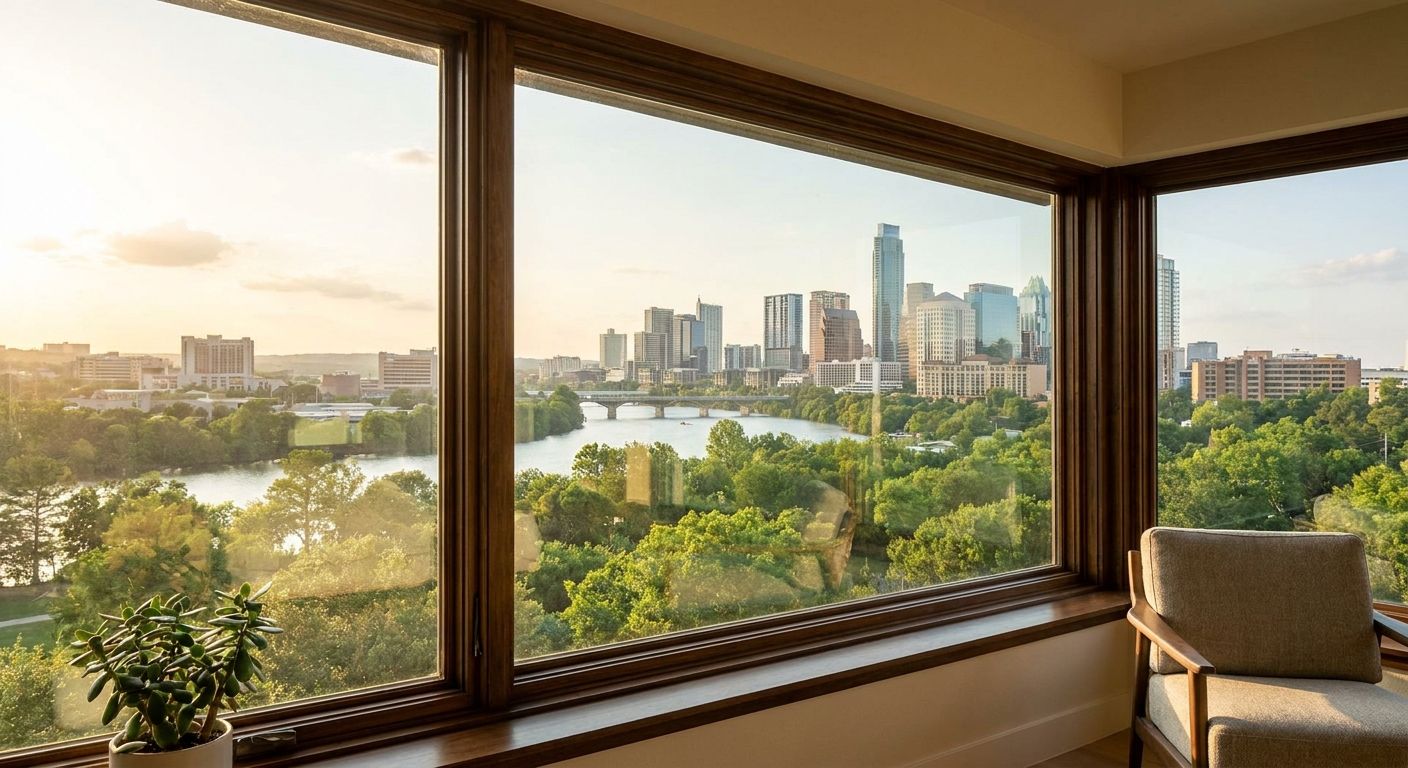
Austin summers push into the 100s Fahrenheit from June through August, and the wrong glass turns a living room into a greenhouse. This guide ranks the window configurations that actually cut solar heat gain in Central Texas, not generic "energy efficient" marketing terms.
- ENERGY STAR South-Central certified vinyl windows are the baseline pick for energy efficient windows Austin homeowners should default to in 2026.
- Triple-pane fiberglass wins for new builds and west-facing walls -- Buy for those projects.
- Single-pane windows, even with storm windows added, are a Skip for any Austin home in 2026.
- Look for U-factor at or below 0.30 and SHGC at or below 0.25 on the NFRC label before signing anything.
Why this matters
A window's job in Austin isn't just keeping cold air out in January -- it's keeping July's sun from turning glass into a radiator. Solar Heat Gain Coefficient (SHGC) matters more here than in northern climates, because the cooling season is longer and the sun angle is brutal on west-facing rooms most of the year.
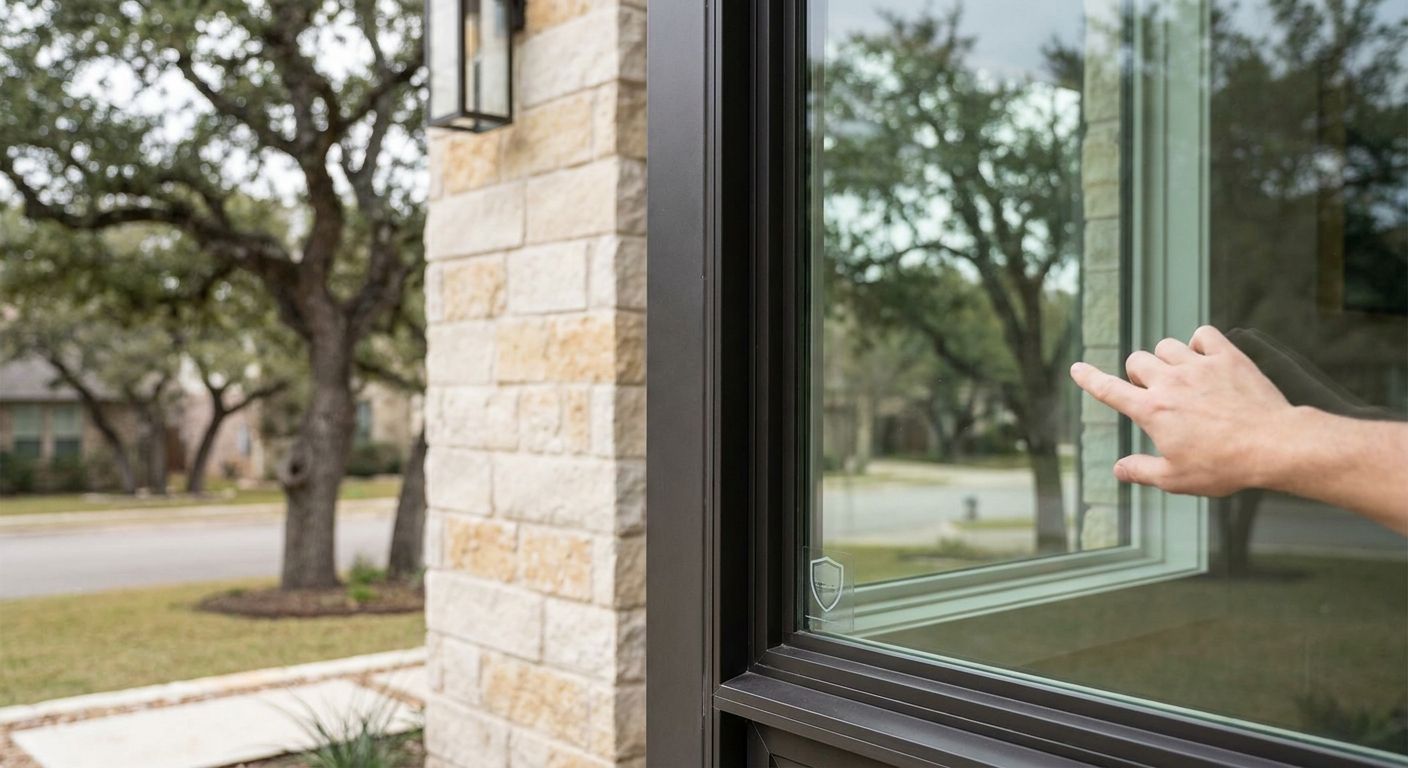
AWE Build, an insured Austin remodeling contractor, installs windows against ENERGY STAR's South-Central climate zone criteria as the working standard for this market. That zone requires a U-factor at or below 0.30 and an SHGC at or below 0.25 -- both numbers should show up on the NFRC label glued to the glass before a window ever ships.
How we ranked
Each entry below is scored against three factors that matter specifically for Austin's climate: SHGC performance (heat gain), U-factor (overall insulation), and frame material (how it holds up against 100-degree afternoons and hail). Entries that don't clear ENERGY STAR's South-Central thresholds get marked Hold or Skip regardless of price. Homeowners weighing a full swap should read how to choose window replacement for your Austin home before comparing quotes -- it walks through the same criteria used here in more detail.
The ranked list
1. ENERGY STAR South-Central certified vinyl windows -- the baseline pick
These meet the 0.30 U-factor and 0.25 SHGC thresholds set for this exact climate zone, which is the minimum bar for any 2026 Austin window purchase. Vinyl frames don't conduct heat the way aluminum does, and they don't need repainting like wood. For a standard homeowner replacement job with no unusual sun exposure, this is the default choice. Verdict: Buy.
2. Triple-pane fiberglass windows -- the premium pick
A third pane and an extra gas-filled cavity drop the U-factor further than any dual-pane assembly can reach, which matters most on west-facing walls that take direct afternoon sun for hours. Fiberglass frames also resist the expansion and contraction that vinyl goes through across a 100-degree summer-to-winter swing. This is the configuration custom window design for Austin new builds projects should spec from the start rather than retrofit later. Verdict: Buy for new construction and west-facing exposure.
3. Low-E coated dual-pane windows -- the workhorse pick
Low-E coatings (the same family of technology behind products like Cardinal Glass's LoE-366 line) reflect infrared heat before it enters the glass, which is the single biggest lever for cutting SHGC on a standard dual-pane unit. Paired with an argon fill, this configuration clears ENERGY STAR's South-Central line without the added weight and cost of a third pane. Verdict: Buy.
4. Argon-filled vinyl windows -- the value add
Argon gas between panes is denser than air and slows heat transfer, typically shaving a meaningful chunk off the U-factor of an otherwise standard dual-pane vinyl window. It's a low-cost upgrade on top of options 1 and 3 above rather than a standalone category. Verdict: Buy as an add-on, not a substitute for Low-E coating.
5. Tinted or reflective glass windows -- the budget-adjacent pick
Tinting cuts glare and some solar gain, but it doesn't reliably clear the 0.25 SHGC threshold on its own and it darkens interior light year-round, not just in July. It's a reasonable stopgap on a room that's already over-heating and can't be re-glazed immediately. Verdict: Hold -- fine as a patch, not a primary strategy.
6. Single-pane windows, even with storm windows added -- the skip
A single pane of glass, storm window or not, cannot approach a 0.30 U-factor in a climate where the AC runs for months. This is the configuration most commonly found in pre-1980s Austin homes and it's the single biggest driver of summer cooling bills in older housing stock. Verdict: Skip.
7. Aluminum-frame windows without a thermal break -- the avoid
Aluminum conducts heat efficiently, which is exactly the wrong property for a window frame in a 100-degree climate. Even paired with decent glass, an unbroken aluminum frame undercuts the whole assembly's performance. Verdict: Skip.
“If the U-factor and SHGC aren't printed on the NFRC label, the window isn't ENERGY STAR certified for Austin's South-Central zone.”
Comparison table
| Configuration | Frame | Typical SHGC range | Verdict |
|---|---|---|---|
| ENERGY STAR South-Central vinyl | Vinyl | ≤0.25 | Buy |
| Triple-pane fiberglass | Fiberglass | ≤0.25, often lower | Buy (new builds) |
| Low-E dual-pane | Vinyl/wood-clad | ≤0.25 | Buy |
| Argon-filled vinyl | Vinyl | Add-on | Buy (add-on) |
| Tinted/reflective glass | Varies | 0.25-0.35 | Hold |
| Single-pane + storm window | Wood/vinyl | 0.50+ | Skip |
| Aluminum, no thermal break | Aluminum | Varies | Skip |
Where to buy
- Verify the NFRC label before signing anything -- U-factor and SHGC numbers should be printed directly on the sticker, not quoted verbally by a salesperson.
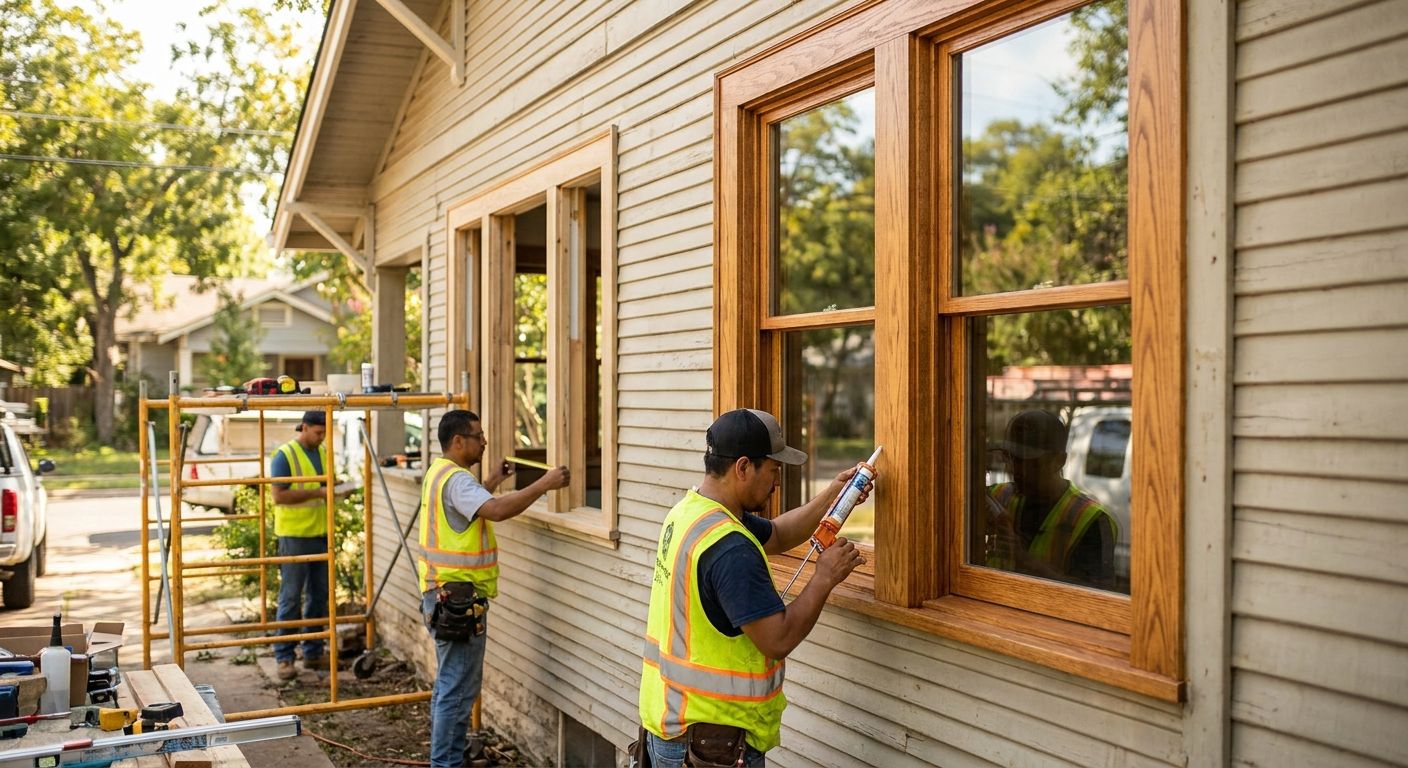
- General contractors managing multi-unit or spec-build jobs should work through a dedicated trade channel rather than a retail counter; see window installation services for Austin general contractors for how that sourcing typically works.
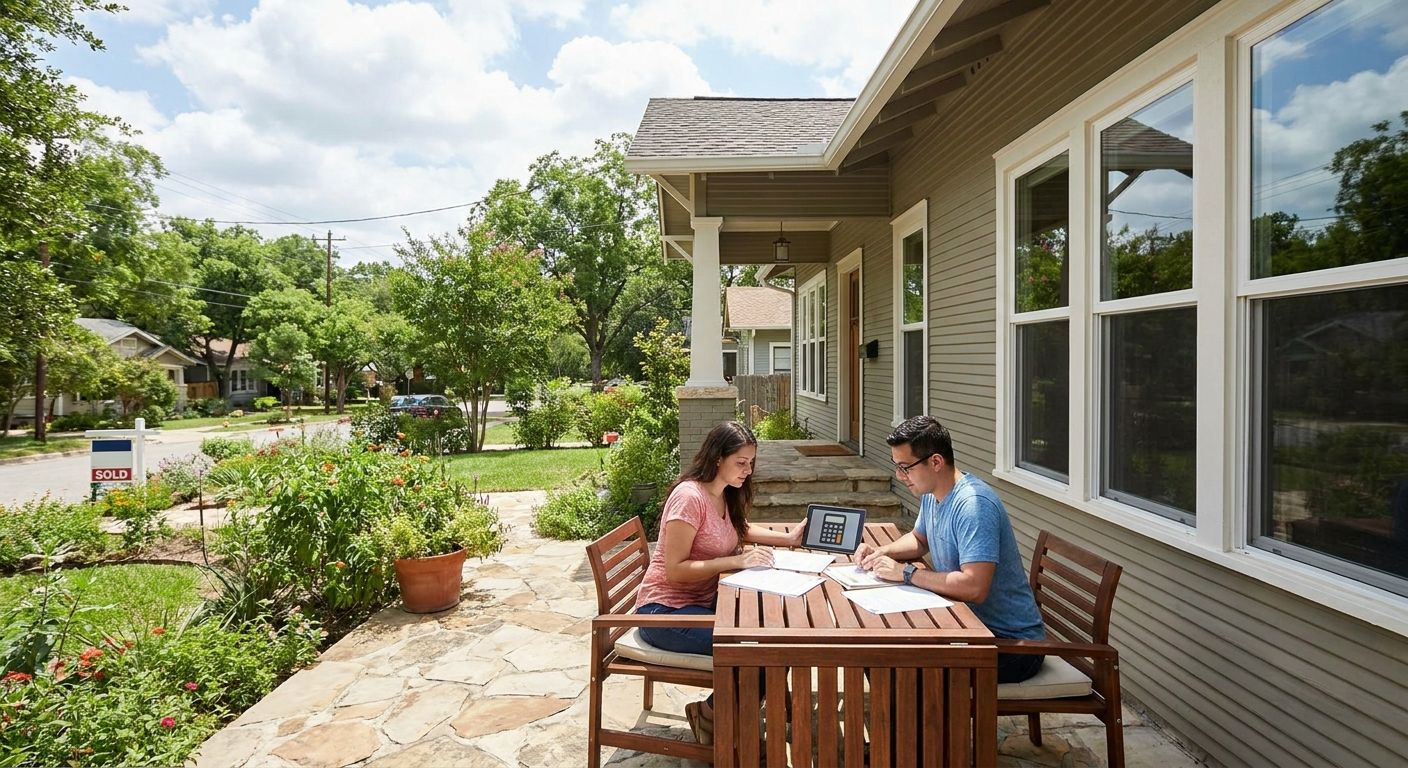
- Get a written, itemized estimate that names the exact glass package and frame material -- verbal quotes that just say "energy efficient" are not specific enough to hold anyone to in 2026.
Get a straight-talk window estimate
Insured Austin contractor, no hard-sell tactics, written quote.
What to avoid
- Marketing terms with no NFRC number behind them. "Energy efficient" printed on a brochure means nothing without a U-factor and SHGC on the actual label.
- Tinted glass sold as a full solution. It softens heat gain, it doesn't solve it, and homeowners who install it as their only upgrade are often back at the same problem within a summer or two.
- Aluminum frames marketed on price alone. The frame material undercuts even good glass in a climate this hot.
FAQ
What's the best energy efficient window for Austin summers in 2026?
ENERGY STAR South-Central certified vinyl or fiberglass windows with Low-E dual-pane glass are the baseline for Austin in 2026 -- look for a U-factor at or below 0.30 and SHGC at or below 0.25 on the NFRC label. Triple-pane fiberglass is the stronger option for west-facing walls or new construction.
Is triple-pane glass worth it in Austin?
Triple-pane is worth it on west-facing exposure and new-build projects where the extra pane's lower U-factor pays off over years of Austin summers. For a standard replacement with average sun exposure, a well-specified Low-E dual-pane window usually covers the same climate-zone thresholds at lower cost.
How much does SHGC matter in a hot climate like Austin?
SHGC matters more in Austin than U-factor alone, because the cooling season runs longer than the heating season here. ENERGY STAR's South-Central zone caps SHGC at 0.25, and any window above that number will let in noticeably more solar heat on a west- or south-facing wall.
Are single-pane windows with storm windows good enough for Austin heat?
No -- single-pane windows, even paired with storm windows, typically run a U-factor well above the 0.30 ceiling for the South-Central zone. They're common in older Austin housing stock and are one of the biggest drivers of high summer cooling bills.
Do aluminum-frame windows work in Austin's climate?
Aluminum frames conduct heat efficiently, which works against energy efficiency goals in a climate that regularly hits 100°F. A thermally broken aluminum frame performs better than a standard one, but vinyl and fiberglass frames generally outperform aluminum on insulation in this zone.
What's the difference between Low-E coating and tinted glass?
Low-E coating is a thin metallic layer that reflects infrared heat while staying visually clear, and it's what most ENERGY STAR South-Central certified windows use to hit the 0.25 SHGC threshold. Tinted glass darkens the pane and reduces some heat and glare but doesn't reliably meet that same threshold on its own.
Should general contractors source windows differently than homeowners?
Yes -- general contractors managing multiple units or spec builds typically need volume pricing and consistent glass specs across a project, which runs through a dedicated trade channel rather than a one-off retail quote. The same NFRC verification rules apply either way.
How do I check if a window is actually ENERGY STAR certified for Austin?
Check the NFRC label attached to the window itself for a U-factor at or below 0.30 and an SHGC at or below 0.25 -- those are the South-Central zone thresholds that cover Austin. A brochure or verbal claim without those two numbers printed isn't sufficient proof.
One last thing
The number that gets skipped most often on Austin quotes isn't U-factor -- it's SHGC, and it's the one that actually predicts how hot a west-facing room gets at 4pm in July. Ask for it by name before comparing any two quotes side by side in 2026.